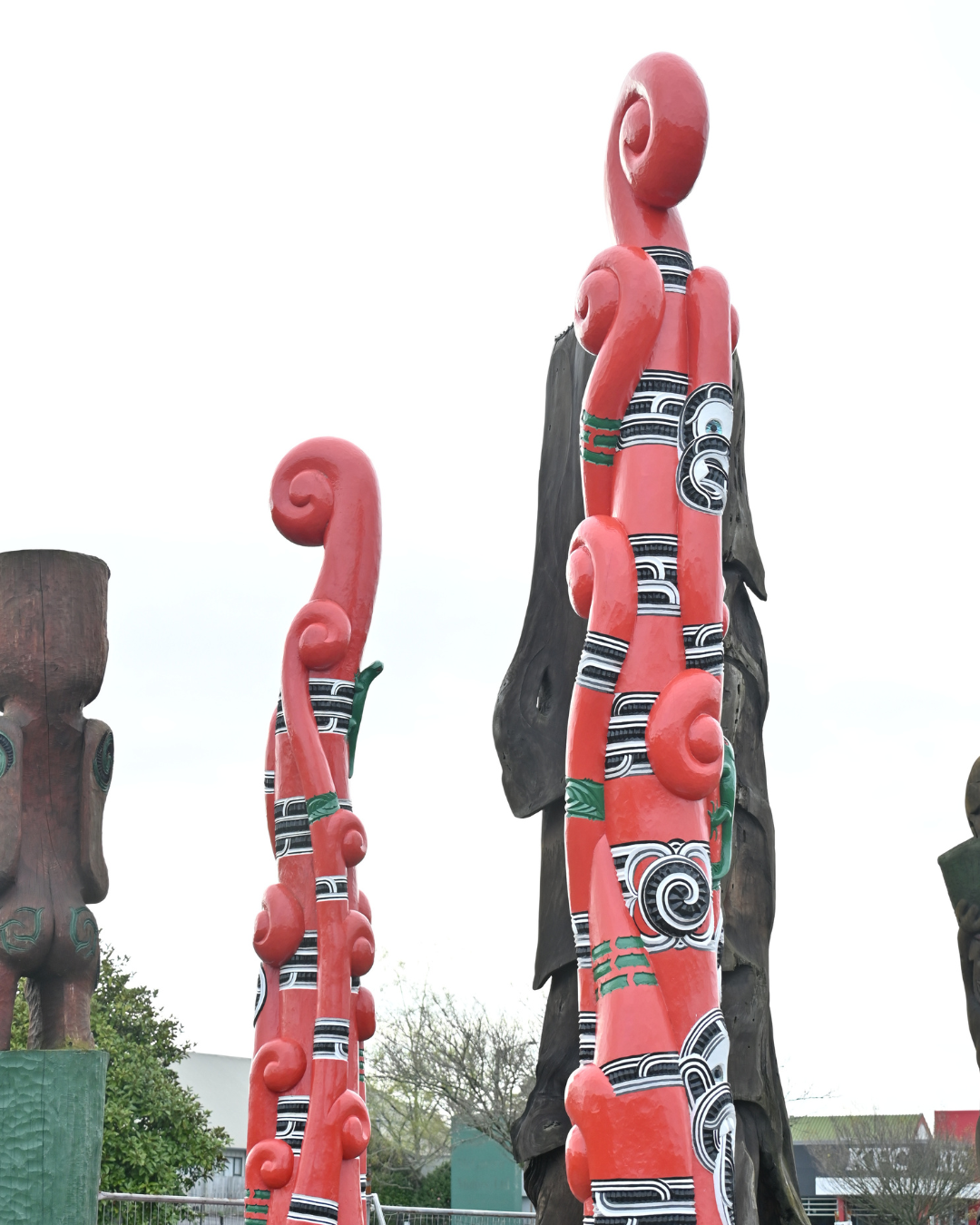
The newest residents of the South Waikato now stand proudly alongside State Highway 1, as part of the collective of pou situated at Tokoroa’s Leith Place.
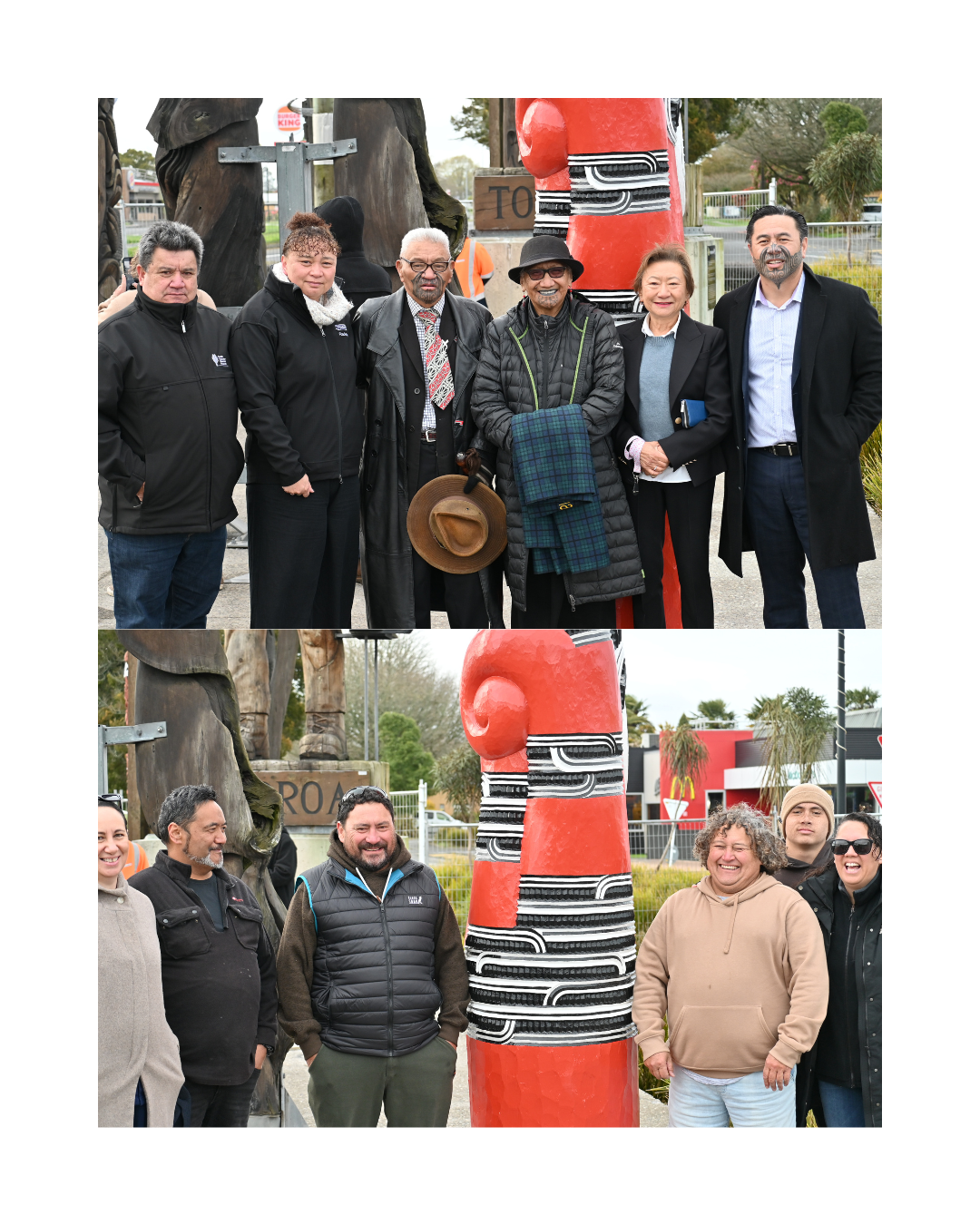
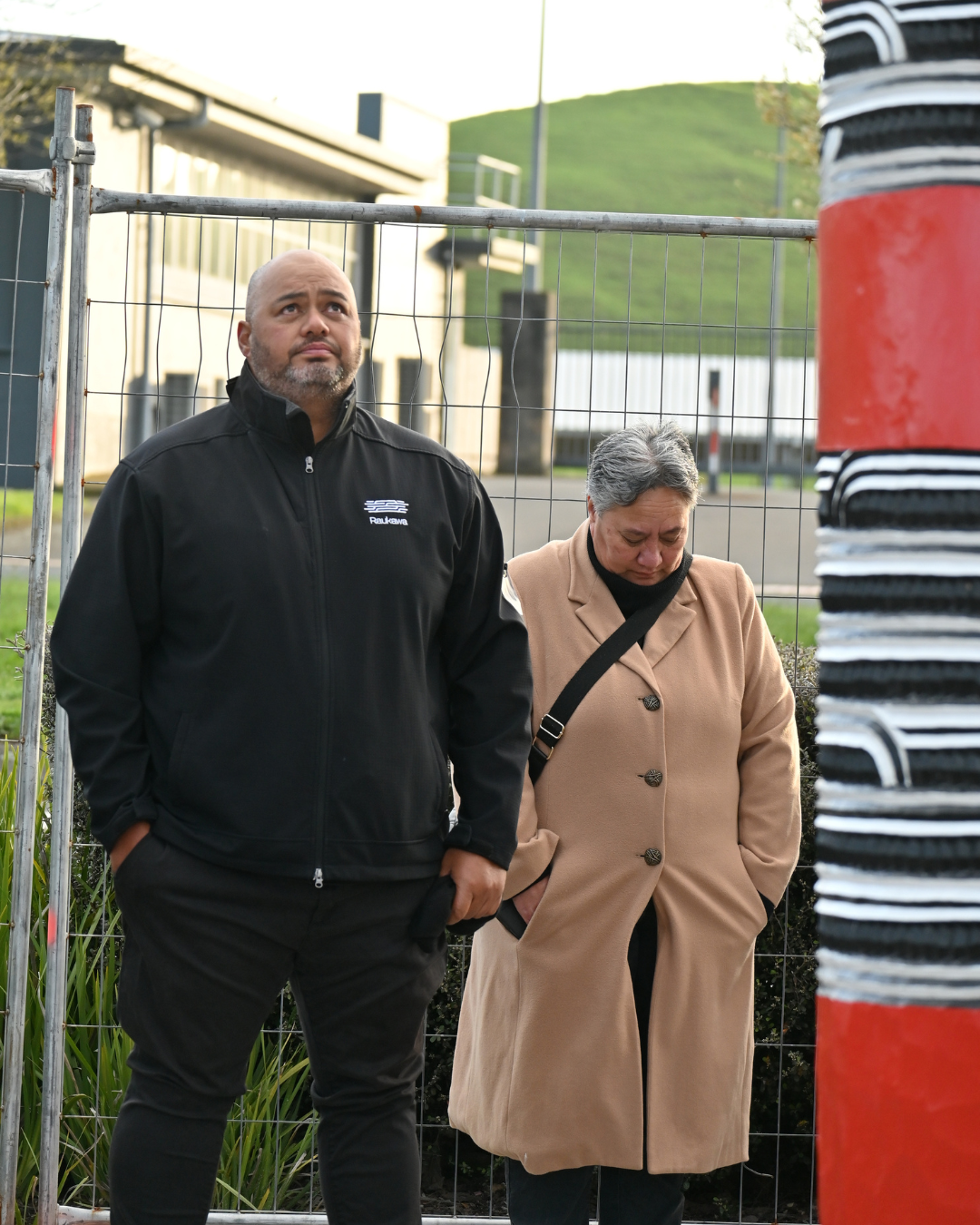
Te Kakara and Te Rau were officially unveiled during a karakia performed at the site on Thursday morning, with representatives from Raukawa and the South Waikato District Council in attendance.
The two new pou – Te Kakara facing the north towards the Kaimai range and Ōkoroire, the birth place of Raukawa, and Te Rau facing the west to Wharepūhunga and Rangiātea where Raukawa grew up – sit alongside the Raukawa pou, which has been repositioned to face the east, symbolising the ancestral journey of Tūrongo of the Tainui waka, who travelled to the East Coast (Te Tai Rāwhiti) where he met and took Māhinaarangi of Ngāti Kahungunu as his wife.
The joint Council-Raukawa kaupapa has been five years in the making and adds to the existing display of art and culture at the popular State Highway stop off area.
Kaitohutohu Matua Mātauranga Māori (Cultural Advisor) Mahu Armstrong spoke on behalf of the South Waikato District Council.
“This is a special moment to mark. It's about honouring the spirit of Kotahitanga (collaboration, shared purpose) working in partnership with Raukawa,” he said.
“These pou are a powerful show of partnership, co-governance and moving forward with our iwi partnership with Raukawa.
“We acknowledge the mahi of those who have brought this together and also acknowledge master carver Te Waamu McGrath and his team, for their cultural stewardship in bringing these taonga to life.”
Raukawa Treaty & Historical Research Advisor Phyllis Tahere remarked on the “glorious weather” that accompanied the special morning and milestone for the community.
“The pou are the result of a journey rooted in partnership, cultural integrity and deep aroha. Developed in close collaboration between South Waikato District Council and Raukawa, the project has been described as “a labour of love,” guided by the enduring principles of Tika (doing what is right), Pono (acting with integrity), and Aroha (compassion and intent),” Tahere said.
"The unveiling honoured not only the beauty and significance of the pou themselves but also the key iwi members who played instrumental roles from the very beginning, shaping the kōrero, guiding design concepts and selecting the master carver.
“Though some of these individuals have passed on, their legacy was acknowledged in a moving tribute by their whānau, who stood proudly as the pou were revealed to the rest of the community.
"I encourage you all to bring your tamariki and mokopuna to this area and tell them the stories of these pou so that the kōrero is passed on to the next generation to continue.
“These pou now stand as more than carvings - they are guardians, storytellers and cultural markers, embodying the wairua of the land, the strength of whakapapa and the shared vision of community.
Tokoroa's Talking Poles were first suggested in 1996 by landscape designer Colleen Priest as a feature for the town's retail area. Since then, around 50 poles have been displayed.